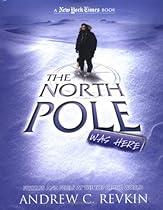
The North Pole Was Here: Puzzles and Perils at the Top of the World (New York Times)
| Author | : | |
| Rating | : | 4.20 (781 Votes) |
| Asin | : | 0753459930 |
| Format Type | : | paperback |
| Number of Pages | : | 128 Pages |
| Publish Date | : | 2014-07-05 |
| Language | : | English |

DESCRIPTION:
Christopher Obert said A good read for both the young and old.. I love to read anything about the poles! They just fascinate me; I mean who doesn't fantasize about the ends of the Earth? This book covers both the legends and lore of the northern most point as well as the science of the cold and white place. A good read for both the young and old.. *'Walking on Water' takes on NEW MEANING * After moving *'Walking on Water' takes on NEW MEANING * mcHaiku After moving 400 yards an hour on an ice floe at the top of the world for three days, Science Writer Andrew Revkin looks down from a helicopter. He watches the icy expanses recede far below while he weighs questions and answers about global warming, and the challenge of presenting these to young readers who are often lured in other directions by iPods & computer games.Tomorrow's scientists need to be 'shook up' and know there are still discoveries to be made; they can be the ones inventing new techniques needed to retrieve & examine rock core samples from deep below the ice. (See pictures on page 66). They can be detectives competing with the. 00 yards an hour on an ice floe at the top of the world for three days, Science Writer Andrew Revkin looks down from a helicopter. He watches the icy expanses recede far below while he weighs questions and answers about global warming, and the challenge of presenting these to young readers who are often lured in other directions by iPods & computer games.Tomorrow's scientists need to be 'shook up' and know there are still discoveries to be made; they can be the ones inventing new techniques needed to retrieve & examine rock core samples from deep below the ice. (See pictures on page 66). They can be detectives competing with the. Excellent non-fiction for kids Carey Hagan This is a great example of well-written, entertaining, informative non-fiction for kids and teens. It's a great blend of science, history, culture, and travel commentary. Revkin gives the perfect amount of science about the North Pole without bogging the reader down. The photos were great, as were the New York Times articles scattered throughout. Very readable and attractive book.
The sun never sets, the air is twenty degrees below zero, and the ice is moving at four hundred yards an hour. Welcome to the North Pole. In 2003, environmental reporter Andrew Revkin joined a scientific expedition to one of the world's last uncharted frontiers, where he was the first New York Times reporter ever to file stories and photographs from the top of the world.In his quest to understand the pole, Andrew leads readers through the mysterious history of arctic exploration; he follows oceanographers as they drill a hole through nine feet of ice to dive into waters below; peers into the mysteries of climate modeling and global warming; and ultimately shows how the fate of the pole will affect us all.
From School Library JournalStarred Review. Grade 6 Up–This exciting book is certain to fascinate readers. . The illustrations include full-color photographs of the author's trek, archival reproductions and photos of previous excursions, original diagrams that clarify concepts, and maps. The work of climatologists and oceanographers is introduced, along with a glimpse at the possible effects of global warming. He recounts ancient perceptions of the far north, the difficulties faced by the first explorers, and the highly publicized early-20th-century race to the pole. All rights reserved. He also covers topics such as the movement of the magnetic po